
The Adaptation International team brings together a diverse group of individuals with a variety of backgrounds, skills, areas of expertise, and lived experience. We are all passionate about the work that we do and recognize the urgency of the climate crisis and the need to adapt. We enjoy working together to make each and every project as successful as possible.
Interested in working with us? Visit our careers page to see what's available.

Alexander (Sascha) Petersen
Founder and Director
Sascha has been working specifically on climate change for 20 years. He has partnered with, and has led dozens of projects with western and Tribal communities,. He has also helped develop field-wide resources such as a Tribal Climate Change Adaptation Guidebook, the Tribal Resilience Action Database, and a private sector focused climate change academy. He loves doing the sometimes messy but always rewarding work of centering community in every planning effort and codeveloping innovative and locally specific solutions.
He was the first managing director of the American Society of Adaptation Professionals, a Lead Author for the Southern Great Plains Region (2014, 2023) and Pacific Northwest Region (2018) of the National Climate Assessment. He recently co-led EPA Funded technical assistance work with communities across the country working to develop equitable resilience design projects. He enjoys working on the leading edge of climate resilience, building new partnerships, developing novel solutions and digging into the realities of what it takes to make this work successful.
Sascha has a Bachelor's degree in physics from Pomona College and a Master's degree focusing on climate change science and policy from the University of Washington. Prior to working on climate change, he trained astronauts at the Johnson Space Center. When not working on climate change, Sascha enjoys having new adventures with his family and being reminded of his place in the universe by big nature.
sascha@adaptationinternational.com

Liz Rohlich
Founder and Owner
With experience working as a health care provider in different parts of the world, Liz is concerned with how climate change will affect human health. She supported our project working with the Yurok Tribe to assess the health impacts of climate change and has a particular affinity for working with low-income and underserved segments of communities that are likely the most vulnerable to climate change.
She has worked in a small town clinical setting in Homer, Alaska and a large level-one trauma hospital in Austin, Texas. As a Peace Corps volunteer, she delivered vaccinations to communities in rural Bolivia, worked with local communities to grow their small businesses, and coordinated cross-country communication with volunteers. Liz's clinical and life experience can help communities design effective resilience strategies.
Liz is a Clinical Nurse Specialist with a Doctor in Nursing Practice, a Master in Nursing and a Bachelor’s degree in Economics from the University of Texas in Austin with a minor in Latin American Studies and Business administration.
liz@adaptationinternational.com

Dr. Charles “Trey” Wallace
Senior Climate Resilience Specialist
Charles is a social scientist who focuses on how people, natural resources, and environmental decision-making intersect. His work focuses on how communities adapt to environmental change, and how science, policy, and local knowledge can be combined to strengthen climate resilience, sustainable resource management, and equitable conservation.
He brings interdisciplinary expertise in stakeholder engagement, mixed-methods social science, participatory mapping, program evaluation, and natural resource policy. His work spans coastal resilience, climate adaptation, fisheries management, and local ecological knowledge in environmental governance. His doctoral research examined how place attachment and local ecological knowledge shape oyster resource management in coastal Florida. More recently, he has focused on climate resilience planning and supporting collaborative decision-making among government, nonprofit, and community partners across the Gulf of Mexico.
Charles holds a B.S. in Natural Resources (Environmental Sciences) from Delaware State University, an M.S. in Fisheries and Aquatic Sciences from the University of Florida, and a Ph.D. in Forest Resources and Conservation (Natural Resource Policy and Administration), also from the University of Florida. His professional experience includes a Postdoctoral Research Scientist role at The Water Institute of the Gulf and a National Academies' Gulf Research Program Science Policy Fellowship, which included collaborative projects with federal, state, academic, and community partners advancing climate resilience and sustainable resource management.
charles@adaptationinternational.com

Sophia Kestell Amaya
Climate Resilience Specialist
Sophia is passionate about using the power of storytelling to raise awareness of environmental issues and inspire change. She began her work with Adaptation International as an intern, supporting the development of the Tribal Resilience database and creating interactive materials for community workshops.
Her work involves conducting research and developing innovative and effective approaches to communicating complex climate and resilience information through easy to understand graphics and icons. In addition to her work with AI, Sophia’s professional experiences include interning with Langan Engineering & Environmental Services, the National Zoo and Conservation Biology Institute.
Sophia recently graduated with a B.A. in Environment, Economics, and Politics (EEP) with a dual major in Film Studies from Claremont McKenna College. Her senior thesis examined how extreme heat impacts US students’ academic performance. Her academic and professional work has deepened her interest in climate change and human well-being.
sophia@adaptationinternational.com
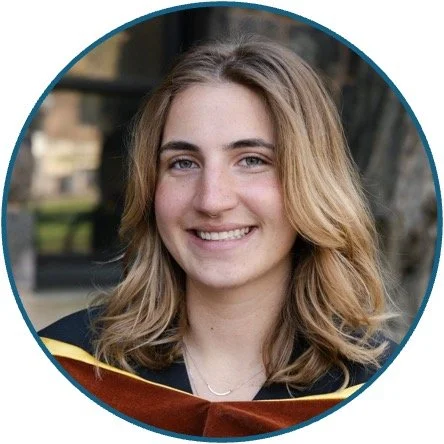
Lucy Baker Climate Resilience Specialist
Being from Michigan, Lucy’s work and understanding of climate change and adaptation have been shaped by her relationship with the Great Lakes. Lucy brings a background in freshwater ecology, environmental education, and community engagement to her work in climate resilience. Her professional and academic experiences have been driven by her interest in how people learn about and make decisions around environmental change, and how education and storytelling can support resilient communities. With Adaptation International, Lucy has contributed to research and analysis supporting community-led adaptation efforts and supported the development of ecological restoration tools.
Now based in San Diego, Lucy also works as an outdoor educator, connecting young people to nature through experiential learning and storytelling. She holds a Master of Science in Environment and Sustainability from the University of Michigan, with a concentration in Behavior, Education, and Communication, and a Bachelor of Science in Environment specializing in freshwater resource management.
lucy@adaptationinternational.com
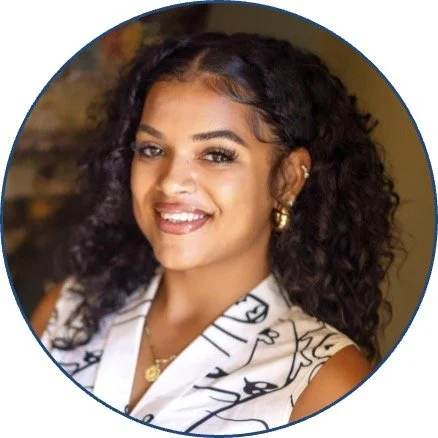
Willow Jackson
Tribal Climate Resilience Specialist
Willow is a 2025-27 NOAA Coastal Resilience Fellow. Through this fellowship, she will support the Bristol Bay Native Association (BBNA) Resilience Collaboration. Her work focuses on addressing the impacts of climate change and other human-driven challenges affecting Indigenous communities. She is from the village of Kake, Alaska and is Tlingit from the Taakdeintaan clan.
She recently graduated with her B.S. in Environmental Science and Resource Management with a coastal and marine emphasis from CSU Channel Islands. Her senior thesis project involved analyzing microplastics in community gardens and she conducted summer research with Alaska Sea Grant, the University of Washington, the Channel Islands National Marine Sanctuary, and SCRIPPS Institution of Oceanography. She has experience in ocean and stream water monitoring, assessing the impact of declining salmon populations on Indigenous communities in Alaska, early ocean and marine conversation education, and analyzing meteorological and satellite ocean data to improve climate modeling.
Willow’s lived experience and research have fueled her deep commitment to advancing community resilience and supporting holistic community resilience.
willow@adaptationinternational.com
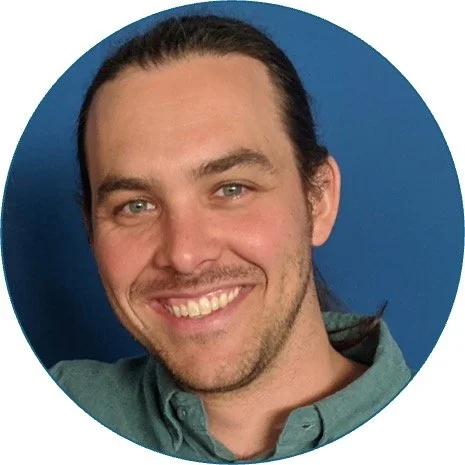
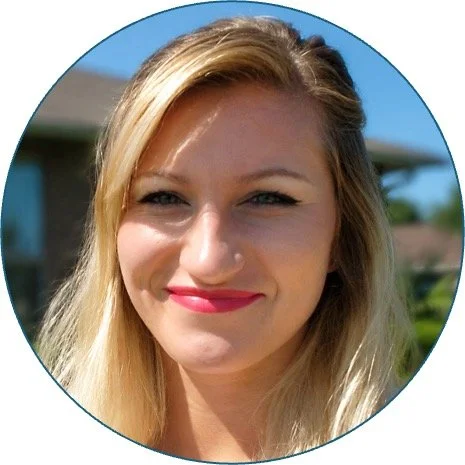

Jeffrey Meek Senior Climate Resilience Specialist
Jeffrey is a climate and sustainability professional based in Minneapolis, MN (ancestral Dakota and Ojibwe lands) who is passionate about climate action, social justice, and building a kinder, more inclusive world. His work focuses on sustainability and climate action planning and assessing climate vulnerabilities. He centers community and stakeholder input and values through collaboration with diverse partners to achieve impactful climate action outcomes.
Jeffrey has 15 years of experience that includes leading the development of resilience (i.e., adaptation) plans for state DOTs and MPOs (e.g., Ohio, CMAP) as well as climate action plans for cities and counties (e.g., City & County of Frederick, MD, Indianapolis, IN). Prior to joining Adaptation International, Jeffrey led climate resilience projects for ICF, he launched the Minnesota Department of Transportation’s efforts to incorporate climate resilience, and advanced Indianapolis’ sustainability initiatives. Jeffrey served as an environmental education volunteer in the Peace Corps and has a masters in environmental science, a masters in public policy, and a bachelors in biology and psychology.
jeff@adaptationinternational.com
Dr. Paulina Cwik Climate and Atmospheric Science
Paulina is an atmospheric and environmental scientist focused on understanding how variability in weather, climate, and natural hazards affect communities and infrastructure. Her work combines climate science, geospatial analysis, and quantitative methods to translate complex data into practical insights that support resilience and informed decision-making.
Paulina earned her Ph.D. from the University of Oklahoma. Her doctoral research focused on identifying the large-scale atmospheric patterns associated with major tornado outbreaks across the United States and investigating how those patterns may change under future climate conditions. By combining atmospheric science with advanced statistical and spatial analysis techniques, she developed methods for linking severe weather environments with climate model projections and assessing potential changes in extreme weather risk.
Outside of work, Paulina enjoys traveling, exploring new cultures, and spending time outdoors. Living in Hawaiʻi, she especially appreciates opportunities to experience the islands’ natural beauty, whether hiking, enjoying the ocean, or exploring the diverse landscapes and communities that make Hawaiʻi unique.
Dr. Trevor Even
Climate Science and Spatial Analysis Lead
Trevor is an applied researcher focusing on issues of how humans and environments interact, and how we as a global society can learn to manage these interactions in ways that ensure long-term social and ecological sustainability. He is a spatial data and systems vulnerability analysis expert and interdisciplinary social scientist. Trevor’s previous work has included assessing community recovery from natural disaster and the vulnerability of land-based livelihoods (such as ranching, outdoor recreation, and farming) to changes in climate. His dissertation work blended anthropological, geographic, climate, and ecosystem science to investigate how different value systems, technologies, ways of understanding nature, and modes of resource governance shape water security and sustainability at the hydrological basin scale in Colorado.
Trevor has his Bachelor’s and Master’s Degrees in Cultural Anthropology and Ph.D. in Human-Environment Interactions Ecology at Colorado State University, where he worked on projects housed in the Department of Anthropology & Geography, the Natural Resource Ecology Laboratory, and the North Central Climate Adaptation Science Center. In 2018 he was named as a Sustainability Leadership Fellow by the School of Global Environmental Sustainability.
trevoreven@adaptationinternational.com
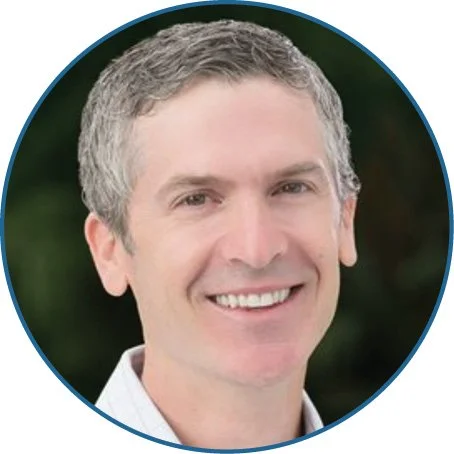
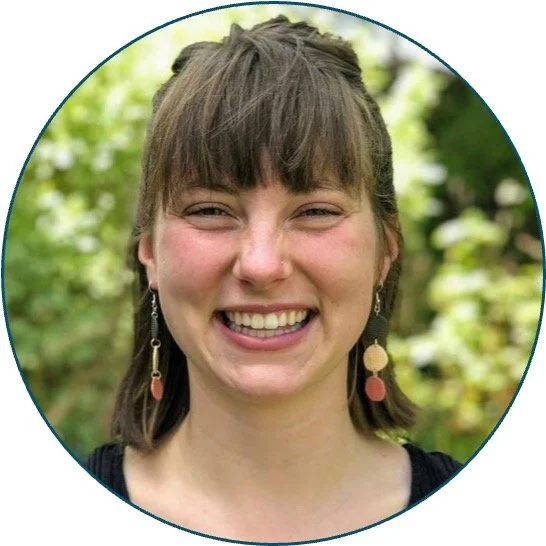

Damon Coppola Hazard Mitigation Lead
Damon is an accomplished emergency management systems engineer. He has guided the development of programs and policy from the most local communities to the national government level in countries throughout the Americas, Europe, Asia, and the Pacific, as well as for regional and international organizations including the United Nations and the World Bank. For Adaptation International he has pioneered the development of a values based and culturally sensitive risk assessment process for hazard mitigation planning with Tribal communities. He also provides programmatic and planning assistance to major private-sector clients, nonprofit organizations, and academic institutions, including enterprise risk management and private sector involvement in disasters.
Mr. Coppola is a recognized specialist in emergency management training and education, having developed and co-developed higher education and professional training programs for the FEMA Emergency Management Institute and for the Department of Homeland Security National Training and Education Division.
Damon holds a Master of Engineering Management (MEM) in Crisis, Emergency, and Risk Management from George Washington University.
Naomi Cutler Spatial Analyst and Researcher
Naomi is a mixed-methods researcher with a particular interest in how geospatial tools can support communities in self-determining their future within the reality of climate change. She is focused on supporting the "last mile" where scientific discoveries are distilled into actionable, interpretable information for communities.
She holds a BA from Middlebury College and an MS from the University of Michigan's School for Environment and Sustainability. She has worked across many fields within the environmental space, including conservation, forestry, outdoor education, and disaster science. She is currently a PhD student in the University of British Columbia's Department of Sociology.